




KU Leuven recently presented key results from the SEEDS project at HPC 2026, held in Vienna. The conference provided an important opportunity to share ongoing research on the future of clean, flexible and integrated heating and cooling systems.
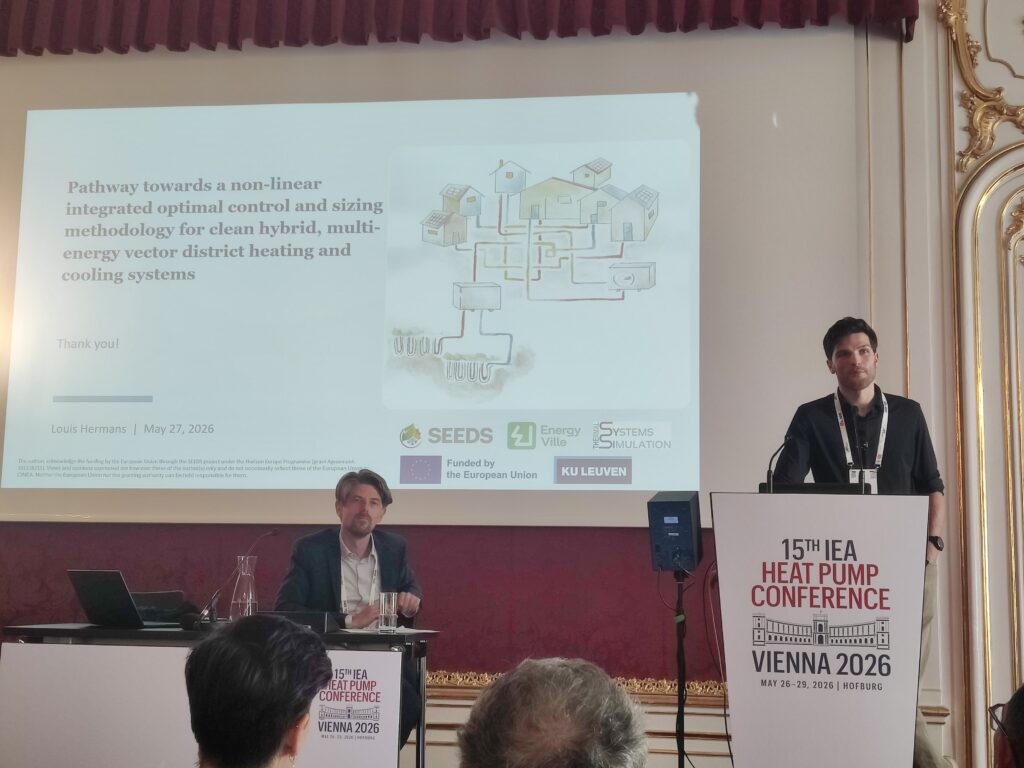
As part of the programme, Louis Hermans presented the paper “Pathway towards a non-linear integrated optimal control and sizing methodology for clean hybrid, multi-energy vector district heating and cooling systems.” This work focuses on the development of an Integrated Optimal Control and Sizing methodology for clean hybrid district heating and cooling systems. The approach combines detailed physics-based models with non-linear Model Predictive Control, with the aim of reducing both investment and operational costs.
The methodology was demonstrated through two Belgian district use cases: a virtual mixed-use district and a real-life heritage district. The results showed significant reductions in total cost of ownership, highlighting the value of integrating operational flexibility directly into the design phase of future district energy systems.
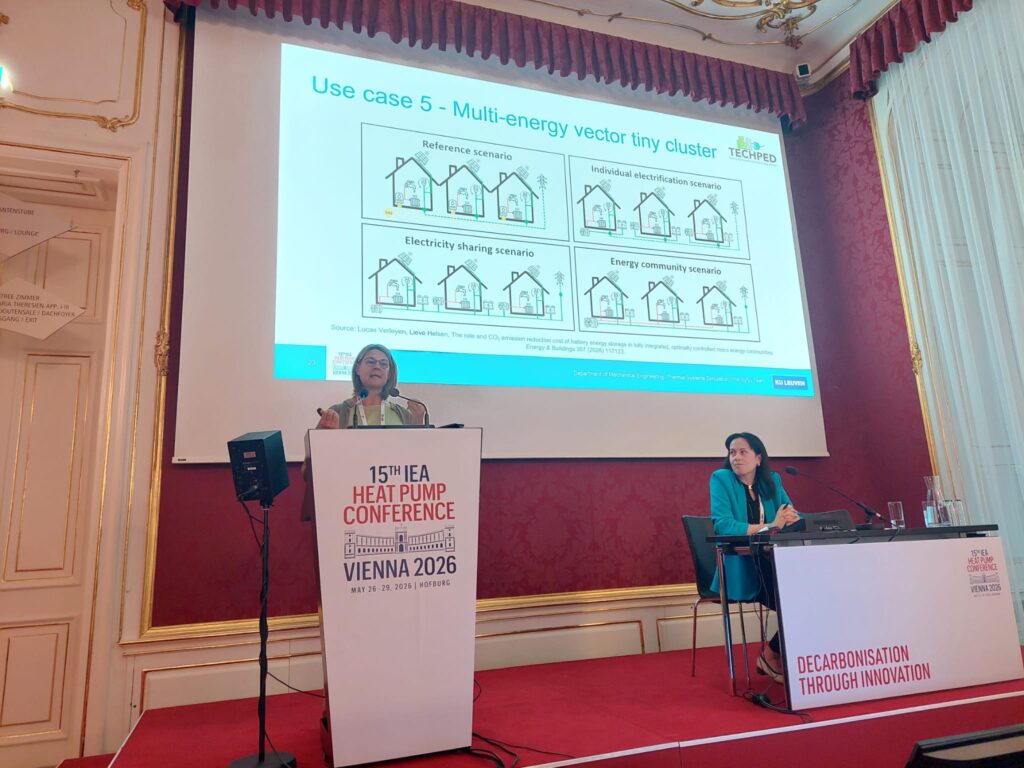
In addition, Lieve Helsen delivered a keynote in the session “Heat pumps in high-density urban areas”, titled “When systems connect – integration makes the difference and physics makes the intelligence.” Her presentation focused on the role of system integration, flexibility and physics-based Model Predictive Control in supporting low-carbon collective heating and cooling solutions.
This topic is especially relevant for dense urban areas, where high energy demand, limited space, grid constraints and access to local renewable or residual energy sources create specific challenges. In this context, smart control strategies can help unlock the flexibility of buildings, thermal networks, heat pumps and storage systems, while supporting both comfort and cost-efficiency.
Through these contributions, SEEDS continues to explore how intelligent, integrated and renewable-based energy systems can support the decarbonisation of cities and districts.


Comments are closed